
SovereignQ in 60 seconds
Six facts, in plain words. Every one is labelled with the evidence behind it.
- What is new
- We design the processor for the quantum software we invent: our own workloads set what the chip must do, for example 12 to 24 CNOT gates for four-qubit kernels before compilation. Building on silicon-donor and modular-computing research, our contribution is a workload-guided deep-donor processor programme with native verification. Three results on our poster have already changed design decisions.
- What it is
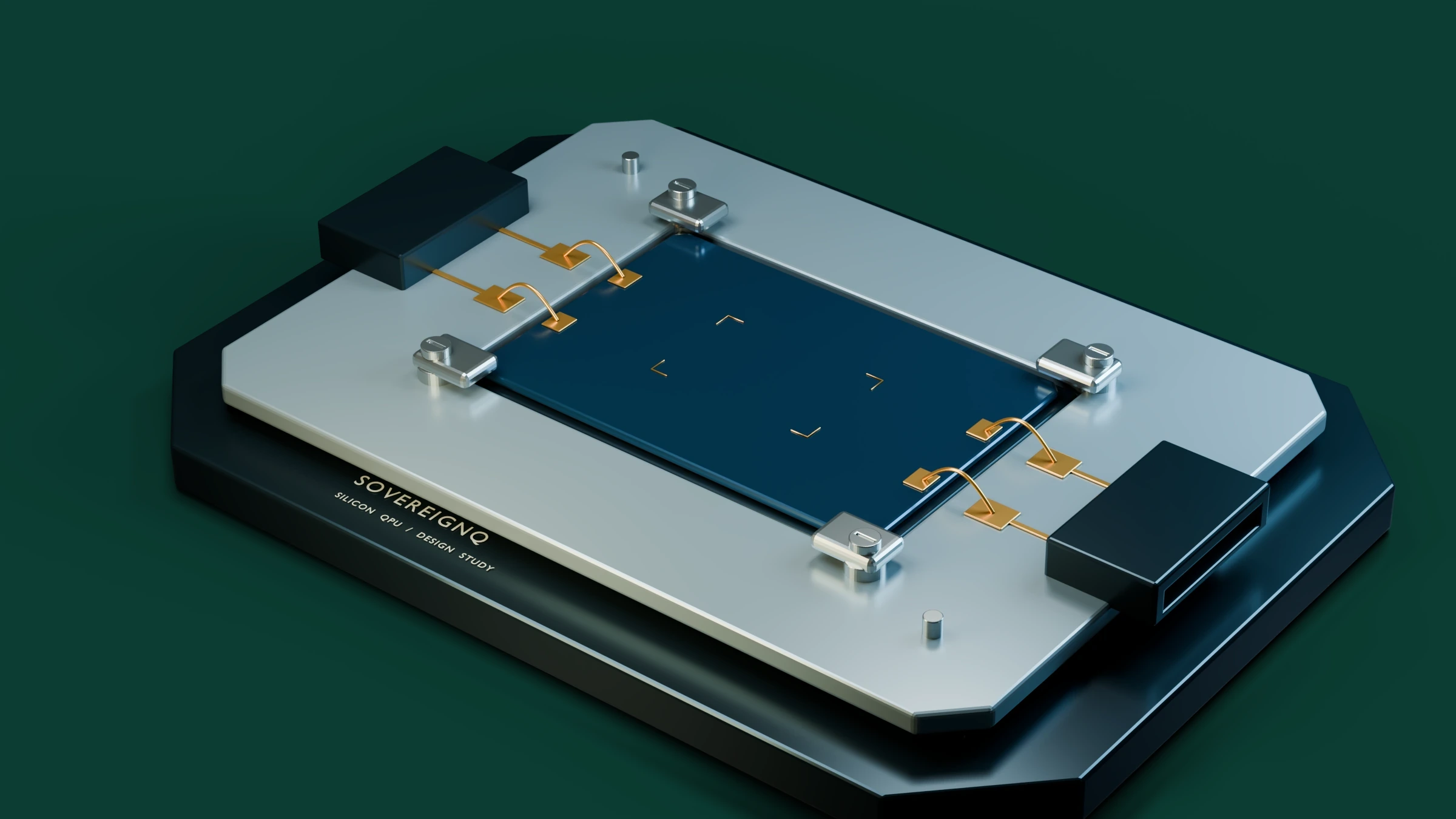
- A Saudi quantum technology programme: original quantum software and a Saudi-designed silicon quantum processor, with the control, memory and engineering systems around it.
- What exists today
- Three original research tools (FQKL, ERDA, QuantumTwin) and a native runtime with 186 automated tests. The processor exists in independently recalculated models; none is fabricated. Poster Fig. 1: two encodings with equal sensitivity scores reached 100% and 50% accuracy across 32 random seeds. The runtime completes a valid job, rejects a faulty one, and reports 'unavailable' for a chip that does not exist yet.
- Why it matters
- Not simply access to an imported quantum computer, but the ability to test, improve, manufacture and eventually own the technology behind it.
- What Saudi Arabia would gain
- Trained engineers, owned designs and measurements, and the right to build, repair and improve. Each step leaves an asset. A contribution to Vision 2030, not an official programme.
- What we need, and what comes next
- Samples, a measurement lab and independent review, to measure a first silicon cell here. No partnership is announced. Later, if qualified: controller IP, memory modules, coprocessors, linked nodes.
Our software placed 2nd at the AMAD Fintech Hackathon 2026, in-person track. Guinness World Records recognised AMAD as the world's largest fintech hackathon.
Scan the poster QR to open our public evidence folder.
Contact +966 50 264 1814 · mohamed54660@gmail.com