
From Quantum Access to Quantum Sovereignty. SovereignQ is developing a Saudi quantum technology stack. A Saudi-designed silicon quantum processor is our flagship.
We built our quantum-native software. Now we are designing the processor to run it: our own workloads set what the chip must do.
- Software: built and running
- Physics: modeled and independently recalculated
- Processor: designed, not yet fabricated
Built and working today: FQKL, ERDA and QuantumTwin, with a native runtime that passes 186 automated tests. 2nd place, AMAD Fintech Hackathon 2026. Three results that already changed the processor design.
Access can be rented. Capability has to be built.
Sending a job to someone else's quantum computer returns an answer. It does not teach a country to design, operate, measure, manufacture or improve one.
A 200-qubit system already runs in Dhahran. Using one is not the same as designing one. We are designing one, here.
Secure, sensitive computing on Saudi terms
Designed in Saudi Arabia for jobs our institutions choose, and open to any country that wants quantum capability it can inspect.
Two first evaluations we propose. Each needs the institution's approval.
Regulated finance
Test fraud models where the data is held.
Measure: fraud recall at equal analyst load
Critical operations
Warn before systems fail, using approved non-personal telemetry.
Measure: warning time at equal false alerts
What this means for security
- Data stays where it is heldInstitutions learn together without handing over their records (FQKL, research software).
- A processor we design is one we can inspectWe know every layer, from atom cell to package (designed, not fabricated).
- Results are checked before anyone relies on themOur native runtime tests what a quantum computer actually did (186 automated tests).
What we do not claim: we do not build encryption or quantum key distribution. Linked quantum nodes are a long-term goal.
Choose your path
Visitors
From the atom to the computer, in one minute.
Explore the processorSAIF judges
Fact sheet and evidence matrix: claim, method, check, failure, next test.
Open the matrixResearchers
How the studies are built, their limits and the references.
Read the methodInstitutions and delegations
SovereignQ in 60 seconds, printable on one page.
Open the brief
Explore the machine
Choose any part, on the model or from the list. Every image comes from our own design models; none shows fabricated hardware.
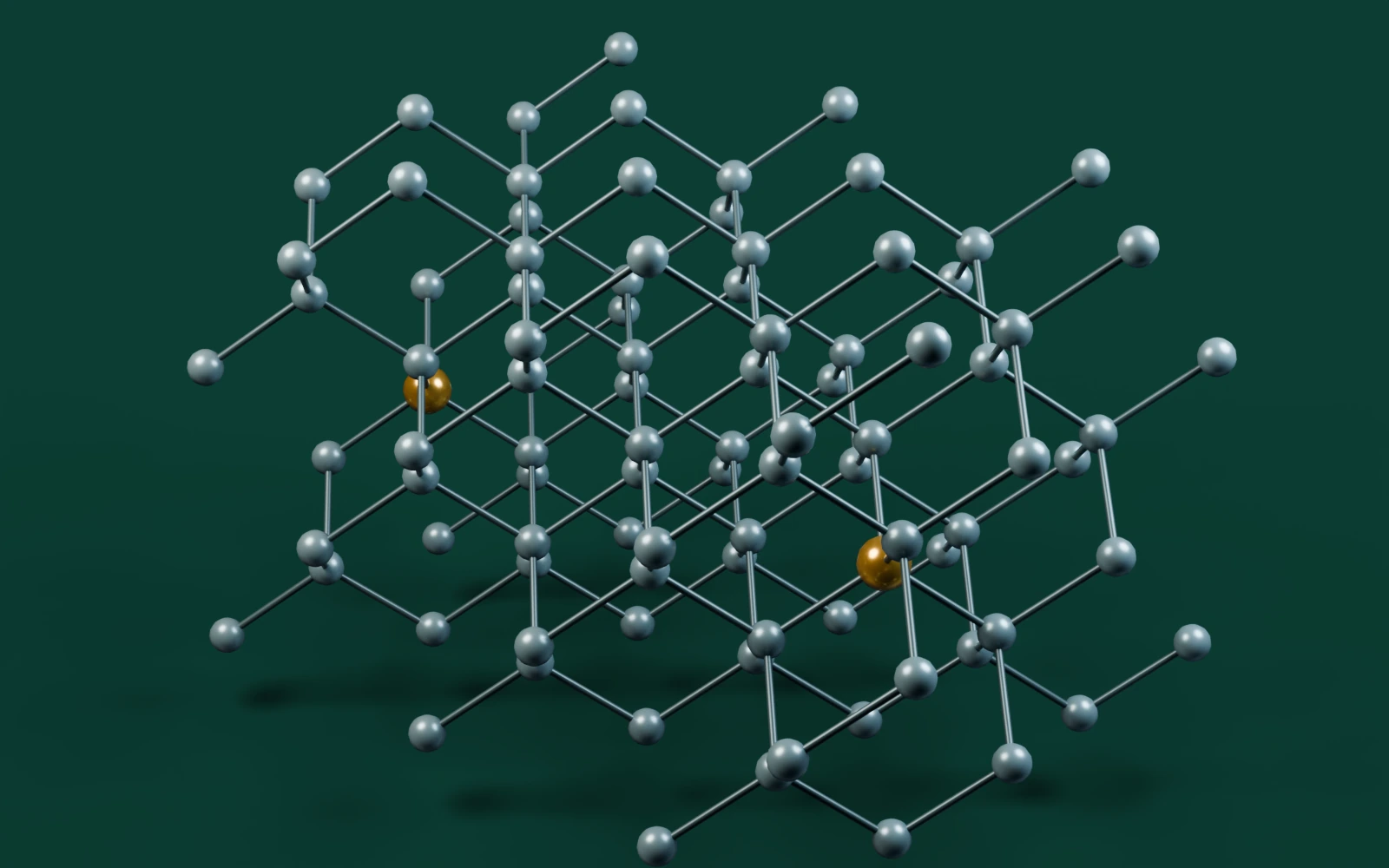

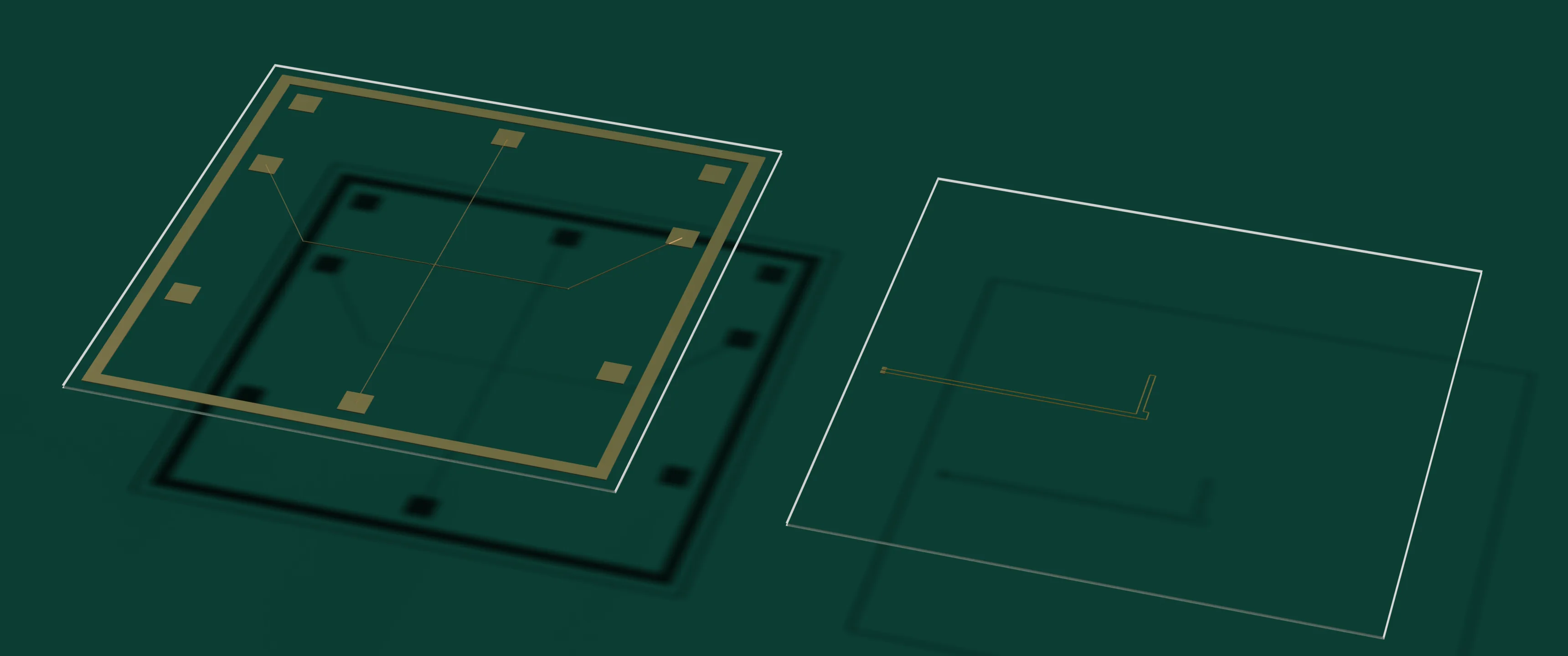
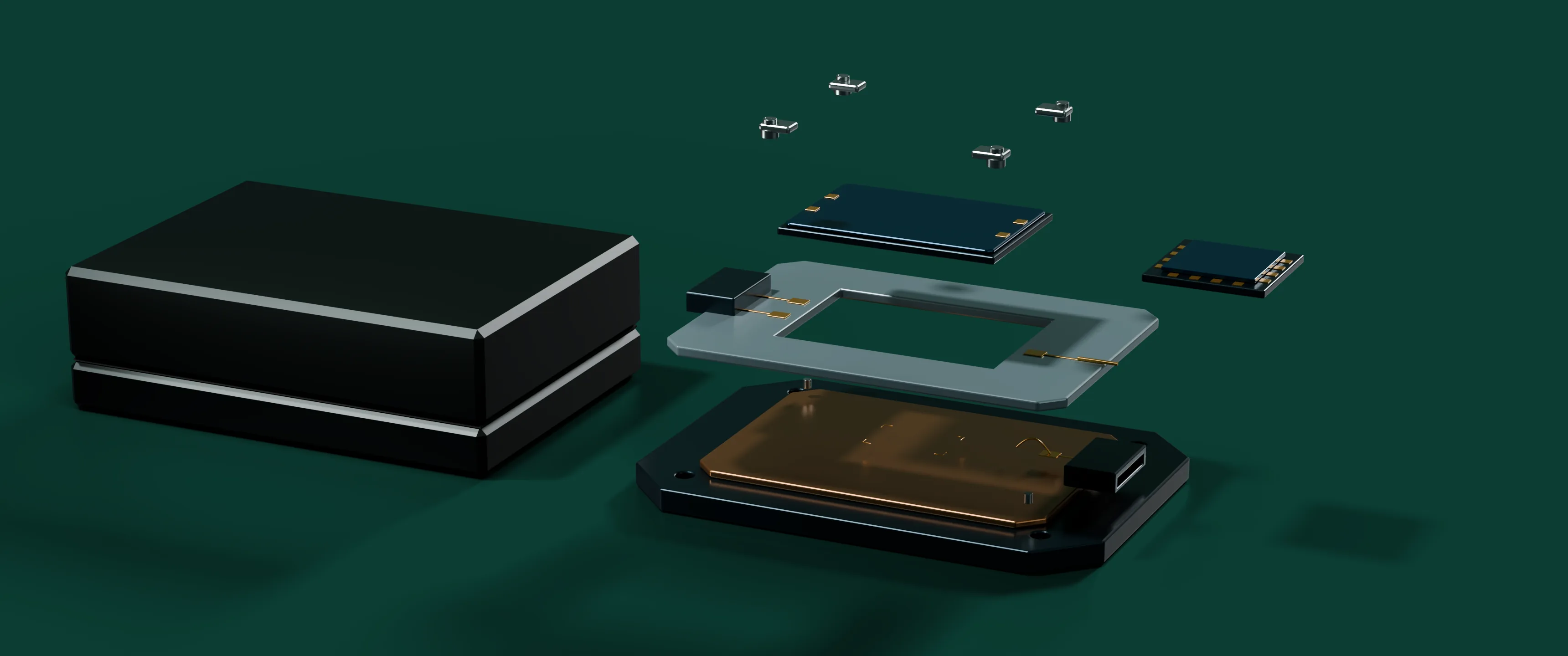
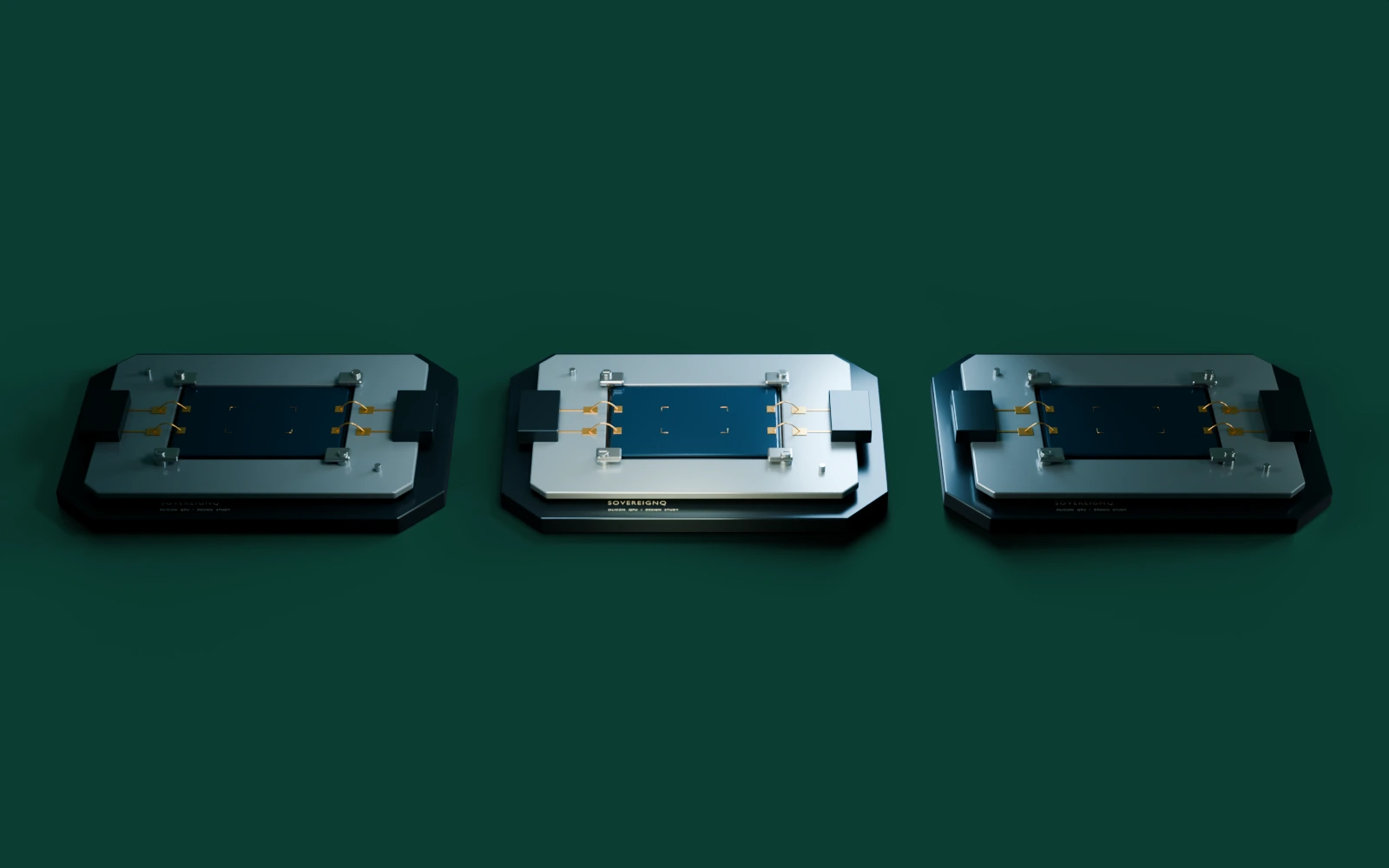
1 of 8
Atomic cell
- What it does
- Donor atoms in silicon hold the quantum information. Sulfur, selenium or other routes: the science is still open.
- Evidence status
- Selective control and memory, in separate numerical models.
- What must be measured next
- Placing and measuring real donor atoms.
Control and readout
- What it does
- Brings timed control signals in and measurement signals out at the chip edge.
- Evidence status
- Control timing and phase-sensitive readout, in models.
- What must be measured next
- A qualified electrical control measurement. None has been recorded yet.
Die
- What it does
- Holds many identical cells, wired for control and measurement.
- Evidence status
- How operations on the cells behave, in numerical models.
- What must be measured next
- Fabricating a die and measuring a single cell on it.
Package
- What it does
- Carries the die and connects it to control electronics and the host computer.
- Evidence status
- The package design and its place in the system.
- What must be measured next
- Building it, and qualifying its wiring and temperature behaviour.
Memory or controller tile
- What it does
- A possible separate chip beside the die: storing quantum states, or running control close to the processor.
- Evidence status
- Quantum memory and control timing, in separate numerical models. The tile itself is a drawing.
- What must be measured next
- Deciding whether it should exist at all, then designing it.
First test coupons
- What it does
- Two proposed test chips: A checks steady control voltages and heat; B checks a microwave line for driving spins.
- Evidence status
- The layouts, from our engineering CAD.
- What must be measured next
- Fabricating and measuring them.
Host computer
- What it does
- The laboratory system around the processor: SovereignQ host software, control and timing, field delivery, readout, optical and thermal services.
- Evidence status
- A functional arrangement; enclosure proportions are display choices.
- What must be measured next
- Building and integrating each subsystem.
Linked modules
- What it does
- Later, several processors working together on larger workloads.
- Evidence status
- Nothing yet; this is a long-term goal.
- What must be measured next
- Designing a qualified physical link between modules.
What the processor must do
- ComputeLink atoms A and B; leave atom C untouched.In the cell · selenium model, poster Fig. 2
- PreservePark information in the nucleus; read it back.In the cell · separate model, poster Fig. 3
- VerifyCheck the full operation, not just the counts.On the host · working software
We design the processor for the software we invent
Most quantum processors are built first, and software adapts later. We start from real problems our own software already works on, and let them decide what the chip must do.
- WorkloadCircuits from our own software
- RequirementsGates, memory, accuracy
- Device designAtom cell, controller, readout
- TestIn models now; measured next
- ReviseResults change the software and the design
A concrete example from the poster: our 4-qubit kernel circuits need 12 to 24 CNOT gates before compilation, and precise phase control. That is what the processor is designed to deliver.
Our software is already shaping the processor
Three results from our SAIF poster, submitted on 19 November 2026. Each one changed a design decision.
- Implemented software
ERDA encodings
- What we found
- Two encodings with equal sensitivity scores reached 100% and 50% accuracy on a synthetic task, across 32 random seeds.
- What it changed
- Encodings are chosen by the task the processor will run, not by one score.
- Numerical model, independently recalculated
Protecting a neighbour atom
- What we found
- In a three-atom selenium-77 model, switching one protection off still scored 99.92%, but the certified worst-case bound failed the screen.
- What it changed
- The design keeps both protections.
- Numerical model, independently recalculated
Quantum memory
- What we found
- With a shorter memory time the electron came back as often, but agreement with a phase-sensitive reference got worse.
- What it changed
- Memory and readout are judged on phase, not only on charge.
One programme, in order of importance
- Our purpose
The mission
From quantum access to quantum sovereignty: a Saudi organization that can design, build, measure and improve quantum technology.
- Designed and modeled; not fabricated
The processor
A Saudi-designed silicon processor: deep-donor atoms, with control, memory and readout chosen by our own workloads.
- Built and tested in research
The software platform
FQKL, ERDA and QuantumTwin create the workloads. A native runtime runs them and checks what the hardware actually did.
- Next measurable steps
National industry
Samples, a measurement lab, a fabrication and test pipeline, and the engineers to run them, here in Saudi Arabia.
Our software, in plain words
Each tool starts from a problem people already have. The names are technical labels; what matters is what each one does.
-
Learning together without sharing data
- The problem
- Banks, hospitals and agencies hold records they cannot hand over, so each sees only part of the picture.
- What it does
- Several institutions train one shared model while every record stays where it is held. Only model updates travel, and a filter limits the influence of a corrupted update.
- Evidence today
- Research software. Tested at AMAD on a public card-transaction dataset split to simulate separate banks.
For specialists: FQKL
Federated quantum kernel learning, with model updates exchanged through the Flower framework.
-
Choosing how data enters a quantum computer
- The problem
- Before a quantum computer can learn from data, the data must be encoded. Two encodings can score the same on a standard measure and still learn very differently.
- What it does
- Compares encodings against what the task actually needs, so a poor choice is caught before it costs a result.
- Evidence today
- Two encodings with equal sensitivity reached 100% and 50% accuracy on a synthetic task across 32 random seeds (poster, Fig. 1).
For specialists: ERDA
Our encoding-analysis method. Local sensitivity scores alone do not predict task accuracy, so encodings are compared on the task itself.
-
Following how a system changes over time
- The problem
- Many risks only show up as a pattern: a sequence of transfers, or equipment drifting towards failure.
- What it does
- Combines quantum and classical models to follow a system over time and warn before something goes wrong.
- Evidence today
- Exploratory research software. No quantum advantage is claimed.
For specialists: QuantumTwin
Hybrid quantum–classical models of change over time.
Watch the runtime demonstration (72 seconds)
One chapter: where our software was first tested
A payment can look ordinary on its own. Put it beside a series of transfers and a different picture can emerge. At AMAD, we asked how Saudi banks could spot those patterns together while each kept its customers' transaction records.
- ERDA
Could a disguised payment slip through?
We tested how a quantum classifier represented a payment's features. Changing that representation affected how often an altered fraudulent transaction escaped detection.
- FQKL
What could banks learn from each other?
Our design kept the transaction records at each bank. Banks would exchange model updates through Flower, with a filter to limit the influence of a corrupted update.
- QuantumTwin
What does a sequence of transfers reveal?
We proposed looking for money-laundering patterns over time, including in new accounts with little history.
How often did the disguise work?
We divided a public dataset of 284,807 card transactions into groups to simulate separate banks. This is the share of disguised attempts that escaped each detector in the team's test. Lower is better.
As reported at AMAD. Each model was tested with a different attack method, so this is not a like-for-like comparison.
In a separate oversight test, the team reported that 19.4% of cases were automatically blocked and routed to compliance review.
2nd place, in-person track
AMAD Fintech Hackathon · Riyadh · July 2026
SovereignQ placed 2nd in the in-person track and won SAR 110,000. Guinness World Records recognised AMAD as the world's largest fintech hackathon.
- AMAD team
- Hamad Aldhubayb (team leader) · Ibrahim Alangari · Basel Abuhawi · Khalid Al-Fawzan
- SAIF poster team
- Hamad Aldhubayb (team leader) · Ibrahim Alangari · Basel Abuhawi · Makki Zakri
That is the innovation on our SAIF poster: the software comes first and sets what the processor must do. Our contribution is a workload-guided deep-donor processor programme with native verification. See the poster's Innovation panel
The foundation for a Saudi quantum computing industry
A producer of quantum technology, not only a buyer. Trained engineers, owned designs and measurements, qualified suppliers, and the right to build, repair and improve. Specialist equipment can be imported; the know-how stays here.
We see this work as a contribution to the national research, development and innovation priority "Economies of the Future" and to Saudi Vision 2030. SovereignQ is an independent team and is not part of any official programme.
Saudi Arabia's National Semiconductor Hub aims to train 5,000 chip-design engineers by 2030. Quantum hardware needs the same skills, and we want to help build them.
Achieved today
- Research software, built and tested: FQKL, ERDA and QuantumTwin (at different maturity levels)
- A native runtime that passes 186 automated tests offline
- Processor, package and test-coupon designs from our own CAD
- Independently checked numerical research on silicon qubits
- 2nd place at the AMAD Fintech Hackathon 2026, in-person track: the world's largest fintech hackathon, recognised by Guinness World Records
Building toward
- Measured silicon cells and qualified control electronics
- A fabrication and test pipeline in Saudi Arabia
- Host-connected quantum processors
- Linked modules and industrial use, if the evidence supports it
What we are looking for
- Metrology and testing facilities
- Access to samples and fabrication
- An industry pilot with permitted data
- Independent engineering review
Institutions interested in evaluating the work can speak with the team at the SAIF booth.
Contact +966 50 264 1814 · mohamed54660@gmail.com
One processor. A whole technology universe.
Discovery creates software and hardware know-how. That becomes components, systems and applications, and each part can have value before the whole computer exists.
At the centre
Concept design, not fabricatedSilicon quantum processor The flagship. Designed, not fabricated.
Software
- FQKLLearning on data that stays with the institutions that hold it. Research software.
- ERDAWhich encoding keeps what a task needs. Research software with published limits.
- QuantumTwinHybrid prediction over time. Exploratory software; no quantum advantage claimed.
- Native runtimeRuns, checks and refuses quantum jobs. Implemented, 186 automated tests.
Components
- Control and readoutTiming, pulses and measurement. Designed and modeled.
- Quantum memoryStore, reset and resume. Modeled, with recorded failures.
- Packaging and test couponsFrom our own CAD. Not fabricated.
- Qualification softwareTools that check what a device really did. Research software.
Systems
- Host-connected coprocessorA processor working beside a classical computer. Long-term.
- Linked modules and networksPhysical links between real quantum nodes. Proposed.
Where it could apply
- Finance and data protection
- Energy and the grid
- Critical infrastructure
- Materials and chemistry
- Logistics and industry
- Telecommunications and security
- Scientific computing
Explored in research, not deployed.
Then it grows: the future technology family
Controller and readout IP
Control and measurement electronics that other quantum builders could use.
Quantum memory modules
Storage that keeps quantum information through reset and reuse.
Host-connected coprocessors
A quantum processor working beside a classical computer.
Linked quantum nodes
Processors that exchange quantum states through a qualified link.
Licensing abroad, if qualified
Designs and know-how offered to other countries, only after qualification.
Future opportunities, not delivered products. Each depends on measured results.
A path with a gate at every step
- NowSoftware works and the chip is designed.
- 2027Measure candidate donor samples against a blank control, including sulfur and selenium. Test our controller.
- 2028–29Qualify one cell: control and readout, if the data support it.
- 2030A first host-connected processor, if every gate passes. A waypoint, not the end.
- BeyondComponents, linked modules and international partnerships, if qualified. None announced.
Each step is reproduced in a Saudi lab before the next, and each step leaves an asset. Our software and assurance keep working through every step.
Science and evidence
Our research is broader than any single result. Here is what the submitted poster established, what we have learned since, and what has not been shown.
New studies since our SAIF poster, 21 November 2026
- Study G3A second operation in the same modeled sequence, in 6.210 µs of modeled time.One specific modeled channel, not a measured gate.
- Study G4A near-perfect reset score can hide a missing gate. A phase-sensitive check catches it.Model predictions, not experimental shots.
- Study G5One fixed workload held for 512 rounds in simulation, about 387 µs.Fragile calibration; not arbitrary programs or hardware.
Try the verification explainer The published research we build on
Not yet demonstrated
- 0 qualified electrical control measurements
- 0 quantum shots on real hardware
- 0 fabricated quantum processors